Granite is a crystalline igneous rock formed at great depths, under extreme conditions of heat and pressure. Predominant in the continental crust – forming the backbone of the bedrock of the continents (in contrast to ‘basalt in the broad sense’, which predominates in the bedrock of the ocean floor).
Portugal is no exception: this rock forms the old ramparts, walls and loose stone walls of many hill forts and settlements dating from around 1200 BC, with the arrival of Celtic civilisation, in a period roughly coinciding with the Iron Age.
During the roughly five centuries of Roman occupation, skilled architects and builders used granite to erect walls, pave roads, build bridges and carve urban stonework that has withstood the test of time, and which, more than two thousand years on, continues to amaze us today.
In the Middle Ages, many of the Arab castles and the Romanesque and Gothic churches and cathedrals of central and northern Portugal used dressed granite as their stone of choice.
Built upon granite
The impressive Viseu Cathedral, built on granite outcrops, was constructed in the 9th century on the site of an early Christian basilica – a fact confirmed by excavations in 1988. It had a central apse and two smaller apses, separated by granite blocks set on cushions, and the building was whitewashed. The interior was painted with frescoes, with ochre tones predominating. On the site, there are remains of two early Roman buildings. Adjacent to it was a necropolis, excavated in 1991.


Anta de Pendilhe
On a hill known as “Picoto do Vasco”, between the parishes of Pendilhe and Vila Cova à Coelheira, stands one of Portugal’s most fantastic and unique megalithic monuments: communities from the Late Neolithic period performed death-related rituals at this monument, which involved lighting a gigantic bonfire over the burial site, as evidenced by the vitrified stone fragments embedded in the tumulus and around the dolmen and the access passage.
Built six thousand years ago by the earliest farming and pastoral communities, this dolmen consists of a chamber supported by nine pillars, measuring 2.86 m in length, 3.40 m in width and 2.80 m in height, and a passageway 5.20 m in length, facing south-east.
Of the original passageway, only four pillars remain in their original position; during the archaeological work, it was possible to identify the foundation pits for a further eight pillars, which allowed for its reconstruction by erecting a wall of loose stones.
The long, imposing access corridor, open and paved with slabs, led to a large atrium where funeral ceremonies were held.
Located on the EN 225, which connects Vila Nova de Paiva to Castro Daire, at km 79.1, on the rural road linking Pendilhe to Vila Cova and Coelheira.
Pedra do Sino
Pedra do Sino, also known as Penedo do Sino or Pedra Sineira, in the São Gens Necropolis.
An imposing block of granite with a stalk-like base, sculpted by the action of natural forces over time, notable for its balance, which gives it a unique and striking appearance. It is believed to have held magical and religious significance for the region’s ancient inhabitants, given its proximity and possible symbolic connection to the São Gens necropolis, carved directly into the rock, which contains around 54 graves of various types.
It is situated 2 km north of Celorico da Beira, in Serra da Estrela.


Serra da Estrela
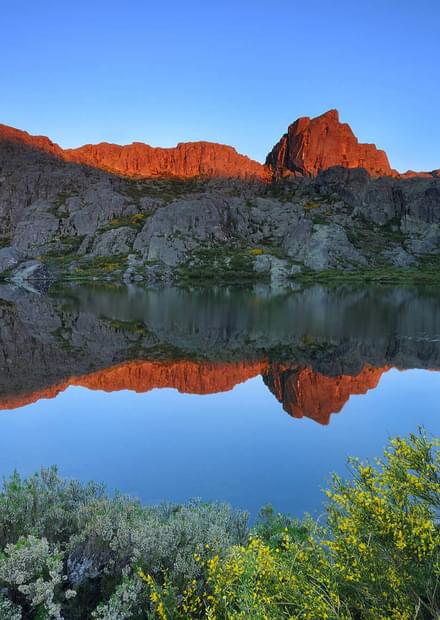
Serra da Estrela consists of extensive granite outcrops, dating from between 340 and 280 million years ago, interspersed with metamorphic rocks, such as schist and greywacke, dating from between 650 and 500 million years ago.
In the granitic areas, which are most prominent in the far north of the mountain and in the upper massif and surrounding areas, the landscape is dominated by extensive plateaus bounded by steep slopes.
In these areas, watercourses follow the existing network of faults and tectonic fractures, and therefore tend to follow a largely straight course.
In areas that were subject to glacial action during the last ice age, erosion features such as cirques, glacial valleys and rounded rocks can be observed, as well as accumulations such as moraines and erratic boulders.
The most impressive examples of this period include, amongst others, the upper Zêzere valley, the Loriga Gorge, the Nave de Santo António, the lateral moraine of Covão do Urso, the erratic boulders on the northern shore of Lagoa Comprida, and the Poio do Judeu, an erratic boulder of colossal dimensions.



A matter of terroir
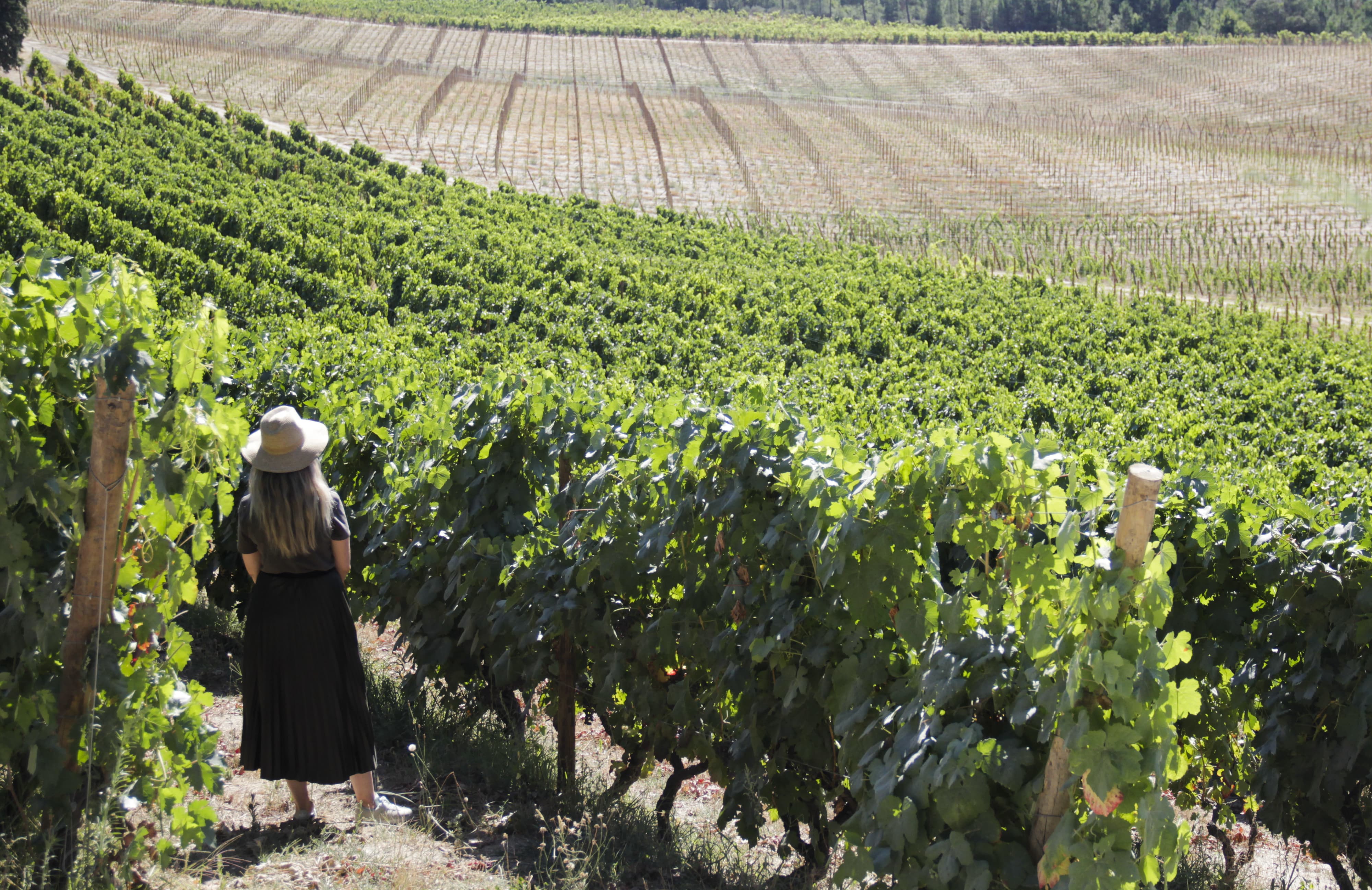
Granite is the cornerstone of the Dão terroir. It is responsible for the unique sensory identity, elegance and longevity of the wines produced in the Demarcated Dão Wine Region.
The influence of granite results in wines with vibrant acidity, pronounced minerals and fine tannins.
The granitic soil, combined with the region’s altitude (150 to 700 metres), contributes to the slow ripening of the grapes, which preserves a high natural acidity—essential for white wines (such as Encruzado) and reds (such as Touriga Nacional)—giving them freshness, tension and a long finish.